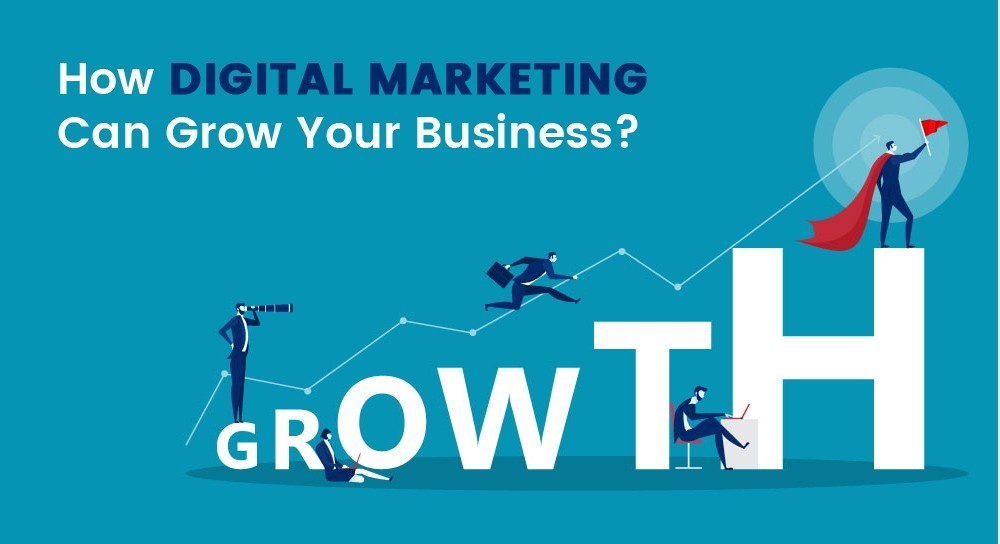
How Businesses Can Grow Using Digital Marketing
A generation ago, growing a business meant billboards, print ads, and word of mouth. Today, the most effective growth engine sits online — and it’s available to businesses of every size, not just those with massive ad budgets. Digital marketing has leveled the playing field, letting a local café or a small consultancy compete for attention alongside major brands. Here’s how businesses can actually put it to work.
1. Build a Strong, Searchable Online Presence
Before anything else, a business needs to be findable. That starts with a well-optimized website and a Google Business Profile that’s fully filled out — accurate hours, photos, categories, and reviews. Search Engine Optimization (SEO) is what determines whether a potential customer finds you or your competitor when they search “coffee shop near me” or “best accountant in [city].”
SEO isn’t a one-time task; it’s an ongoing practice of publishing useful content, earning backlinks, and keeping technical site health in good shape — fast load times, mobile-friendly design, and clear navigation all factor into rankings. Businesses that treat SEO as a long-term investment consistently outperform those that only rely on paid ads, because organic visibility keeps compounding long after a single campaign ends.
2. Use Content Marketing to Build Trust
People buy from businesses they trust, and content is how that trust gets built before a sale ever happens. Blog posts, how-to guides, videos, and social media content let a business demonstrate expertise and answer the questions potential customers are already asking. A bakery might post reels of the baking process; a financial advisor might write short guides on retirement planning.
The format varies, but the principle is the same: give value first, and sales follow naturally. Consistency matters more than perfection — a steady stream of decent content outperforms occasional brilliance. Over time, a content library also becomes a compounding SEO asset, since older posts keep attracting search traffic long after publication.
3. Meet Customers on Social Media
Social platforms aren’t just for brand awareness anymore — they’re discovery engines, customer service channels, and direct sales tools all in one. The key is picking the right platform for your audience rather than trying to be everywhere. A B2B software company will get more traction on LinkedIn than TikTok; a fashion brand is likely the reverse.
Once the platform is chosen, a content calendar helps maintain consistency, mixing educational posts, behind-the-scenes content, and promotional pushes so the feed doesn’t feel like a constant sales pitch. Engaging directly with comments and messages also builds a sense of community that traditional advertising simply can’t replicate.
4. Leverage Paid Advertising Strategically
Organic growth takes time, and paid advertising can accelerate it. Platforms like Google Ads and Meta Ads allow precise targeting by location, interest, demographics, and behavior, meaning even a small budget can be spent efficiently if targeting is done well. The advantage of digital ads over traditional media is measurability — a business can see exactly what an ad costs per click, per lead, and per sale, then adjust in real time.
Testing different creatives, headlines, and audiences on a small scale before committing a larger budget helps avoid wasted spend. Retargeting ads — showing ads to people who already visited your site — are often the highest-converting spend of all, since they reach warm leads rather than cold audiences.
5. Nurture Leads With Email Marketing
Email remains one of the highest-return channels in digital marketing, largely because it reaches people who’ve already opted in. A welcome sequence for new subscribers, regular newsletters, and personalized offers based on past purchases all keep a business top-of-mind without relying on algorithms the way social media does.
Unlike a social following, an email list is an asset the business fully owns — no platform can take it away or change the rules on how it’s delivered. Segmenting an email list (by purchase history, engagement level, or interest) also allows far more targeted, relevant messaging than a one-size-fits-all blast.
6. Track Data and Let It Guide Decisions
One of digital marketing’s biggest advantages over traditional marketing is data. Tools like Google Analytics and platform-native dashboards show exactly where traffic comes from, which pages convert, and where potential customers drop off. Reviewing this data regularly — not just collecting it — is what separates businesses that improve over time from those that repeat the same tactics indefinitely.
A/B testing headlines, images, and calls-to-action turns guesswork into evidence. Small, consistent adjustments based on real numbers compound into meaningful growth over months and years.
7. Stay Consistent and Patient
Perhaps the most overlooked ingredient in digital marketing success is simple persistence. SEO can take months to show results. A content strategy needs a backlog before it builds momentum. Ad campaigns need iteration before they’re efficient. Businesses that treat digital marketing as a long-term system, rather than a quick fix, are the ones that see compounding growth rather than short bursts followed by plateaus.
The Bottom Line
Digital marketing isn’t a single tactic — it’s an ecosystem of SEO, content, social media, advertising, and email working together. Businesses that grow fastest are usually the ones that don’t chase every new trend, but instead pick a few channels that fit their audience, execute consistently, and use data to refine their approach over time. Done well, digital marketing turns a business’s online presence into its most reliable, cost-effective growth channel — one that keeps working long after the initial investment is made.